01
Purinergic Signaling (ATP)
In a mouse model, acupuncture increased local extracellular adenosine, and its antinociceptive effect required adenosine A1 receptors17.
You have been sold a dangerous myth. An analysis of the Cochrane Database found that available evidence could neither support nor refute 49% of the interventions evaluated2. The "standard" treatments for chronic pain—opioids and NSAIDs—are statistically dangerous and frequently ineffective3,5. Meanwhile, a 20-year PubMed analysis identified more than 13,000 acupuncture-related research publications originating from 60 countries8. It is time to rethink what you consider a conventional medical intervention.
Modern medicine relies heavily on pharmacological suppression. Before you dismiss acupuncture as an "alternative," let us audit the safety and efficacy of the conventional standard of care.

In the SPACE randomized trial, opioid therapy was not clinically superior to non-opioid medication for pain-related function over 12 months, with pain-intensity scores slightly favoring non-opioids3.
| CONDITION | THE BIOLOGICAL INTERVENTION (ACUPUNCTURE) | THE "STANDARD" ALTERNATIVE |
|---|---|---|
| Anxiety & Depression |
LARGE EFFECT SIZE A 120-patient pragmatic randomized trial found acupuncture had a large effect on reducing anxiety and depression compared to conventional treatment13. |
50% INADEQUATE RESPONSE As many as 50% of patients treated pharmacologically for generalized anxiety disorder (GAD) have an inadequate response14. |
| Chronic Osteoarthritis |
CLINICAL DISSONANCE A network meta-analysis ranked acupuncture among the more effective short-term physical treatments for knee OA9. Conversely, NICE NG226 currently recommends against acupuncture for osteoarthritis10. |
HIGH RISK PROFILE NSAIDs and COX-2 inhibitors are commonly prescribed but carry substantial adverse effects, including a heightened probability of myocardial infarction5. |
| Menopausal VMS (Hot Flashes) |
SIGNIFICANT REDUCTION A meta-analysis of 12 studies involving 869 participants found acupuncture significantly reduced hot-flush frequency and severity11. |
ONCOLOGICAL RISK Hormone Replacement Therapy (HRT) is the primary mainstream approach. There is evidence that combined estrogen and progestin therapy can increase the risk of breast cancer12. |
| Cancer-Related Pain |
MODERATE EFFECT SIZE Acupuncture is effective in relieving cancer-related pain, particularly malignancy-related and surgery-induced pain16. |
PAUCITY OF EVIDENCE For opioids, the main choice for severe pain, the amount and quality of evidence around their use for treating cancer pain is "disappointingly low"4. |
How acupuncture directly modulates the human nervous system.
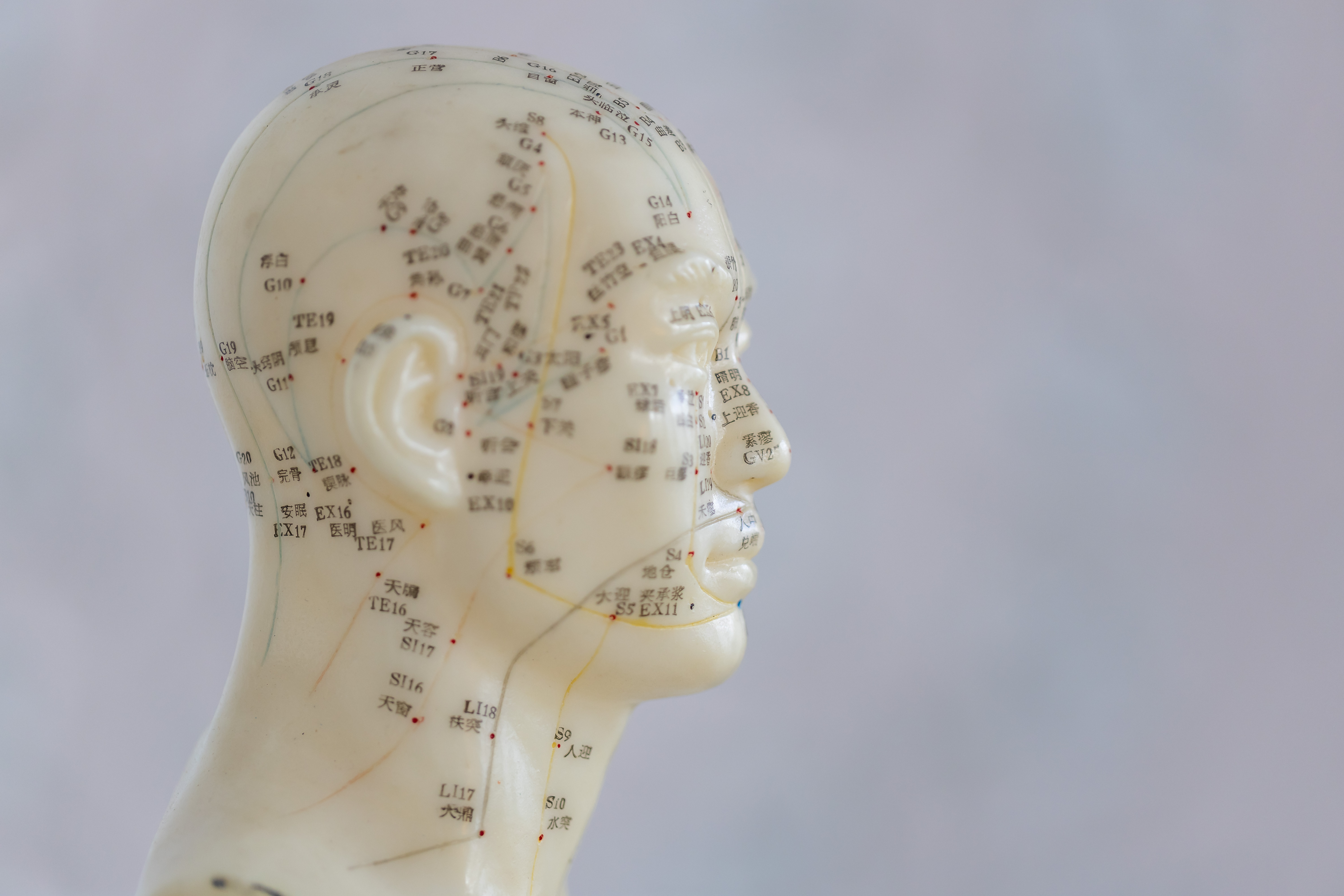
ANATOMICAL NEEDLE MAP — LATERAL VIEW (HEAD / FACE)
In a mouse model, acupuncture increased local extracellular adenosine, and its antinociceptive effect required adenosine A1 receptors17.
Human neuroimaging suggests traditional acupuncture and sham acupuncture produce different effects on μ-opioid receptor binding18. It engages endogenous analgesic pathways without administering an exogenous opioid drug.
Acupuncture modulates parasympathetic activity, the branch of the nervous system associated with rest, relaxation, digestion and tissue healing19.
// CLINICAL METAPHOR: ACTS AS A PHYSICAL CIRCUIT BREAKER TO CHRONIC HYPER-VIGILANCE.
Human neuroimaging studies report acupuncture-associated changes in functional brain connectivity20. Preclinical studies also suggest modulation of HPA-axis stress responses.

CLINICAL APPLICATION: LEICESTERSHIRE, UK
If the current standard of care has failed to resolve your condition, the definition of insanity is asking for a higher dose. Submit your clinical variables below for a precision biological intervention.
Your clinical intake variables have been logged securely. We will review your presentation against the current evidence base and contact you shortly to schedule an evaluation.